7 Tips to Text Better with College Coaches
Learn how to text college soccer coaches the right way. 7 simple tips on what to say, when to text, and NCAA contact rules, from a soccer dad who's been there.
 Beau6 min read

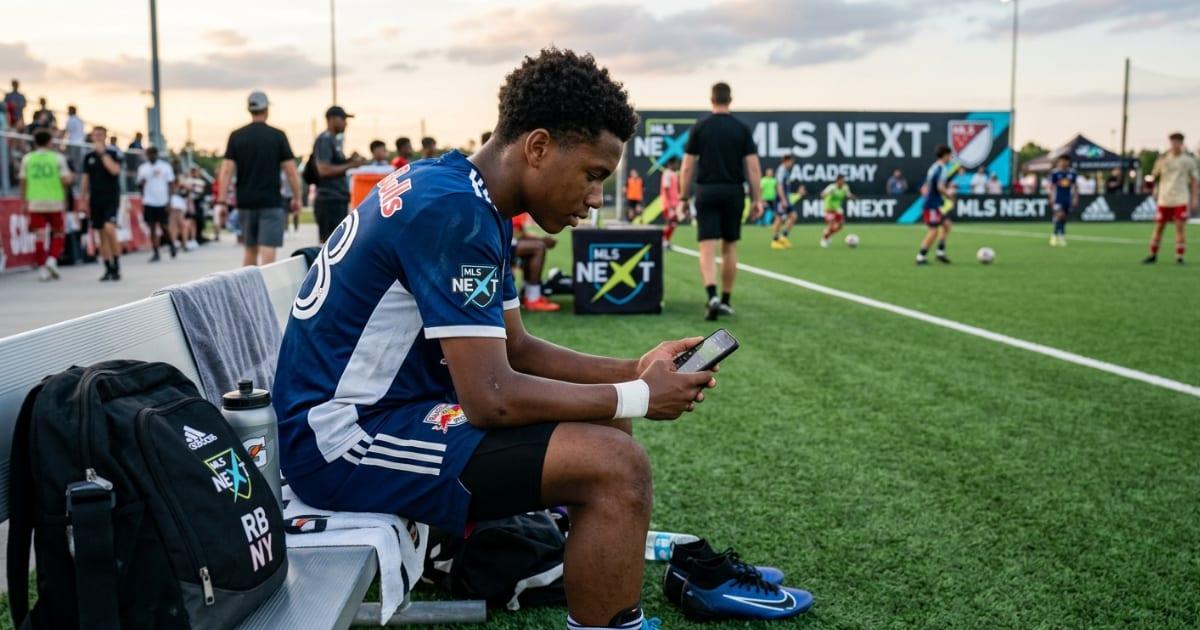
Texting a college coach isn’t like texting your friends. The goal of every text is to keep the conversation going.
Keep it short, make it about them, give them something to watch, and always make it easy to reply. Do that, and you’ll stand out from the hundreds of players blowing up their phones with “hey coach what’s up.”
I’ve watched my son and his teammates go through this. The players who got replies weren’t always the best on the field. They were the ones who texted like they meant business. Here’s what works.
First, Know the Rules
Before you hit send, know where you stand. For NCAA Division I men’s soccer, coaches can’t text, call, or email you about recruiting until June 15 after your sophomore year. That rule goes both ways. Before that date, you can’t have a recruiting conversation by text with a D1 coach either.
Division II coaches can start texting on June 15 before your junior year. Division III and NAIA coaches can text you anytime.
So if you’re a freshman or sophomore, email is your main tool for D1 schools. Texting comes later. Once that date hits, the phone becomes one of your best recruiting weapons.
Tip 1: Don’t Text First. Earn the Number.
Most coaches don’t hand out their cell number to everyone. You usually get it after an email exchange, a camp, or a phone call. If a coach gives you their number, that’s a good sign. Treat it that way.
Don’t go hunting for a coach’s personal cell online and cold-text them. It feels weird, and it can hurt you. Start with email (here’s what to write in your first one). Let the text be the next step.
Tip 2: Introduce Yourself Every Time (At First)
Coaches have hundreds of recruits saved in their phones. They might not have you saved at all. Start your first few texts with who you are.
Bad:
Hey coach, did you see my game?
Good:
Hi Coach Miller, this is Jake Ramos, 2028 center back, playing MLS NEXT U17. Thanks for coming to our game Saturday.
Name, grad year, position, club. Every time until they clearly know you.
Tip 3: Keep It Short
A text is not an email. If the coach has to scroll, it’s too long. Aim for two to four sentences.
Say one thing. Ask one thing. Done.
Hi Coach Miller, Jake Ramos, 2028 CB. We play Saturday at 10am on Field 4 at the Jefferson Cup. Would love for you to come watch if you’re there.
That’s it. Field number, time, ask. Easy for a coach walking between games.
Tip 4: Always Give Them Something Useful
Every text should have a reason. Don’t text just to say hi. Good reasons to text a coach:
- Your game schedule for a showcase they’re attending
- A short clip of a goal, a big save, or a great defensive play
- An update, like a new highlight film, better grades, or a new club team
- A thank-you after a camp, call, or visit
- An answer to a question they asked you
If you can’t think of a good reason, you probably don’t need to send it.
Tip 5: Text Like You’d Talk to a Teacher
You don’t need to sound stiff. But you’re not texting your buddy either.
Use real words. “You” not “u.” “Thanks” not “ty.” No slang, no emojis, and definitely no “yo coach.”
Use capital letters and periods. Read it once before you send it. One typo won’t kill you, but a sloppy text tells a coach how you might treat everything else.
Tip 6: Be Patient and Don’t Double Text
Coaches are busy. They’re running practice, traveling, watching games, and texting dozens of other recruits. If they don’t reply in a day, that’s normal.
Wait about a week before you follow up. And when you do, add something new. Don’t just send “??” or “Did you see my last text?”
Better:
Hi Coach, wanted to send this clip from last weekend. Scored the game winner off a corner. Hope your season’s going well.
If you still don’t hear back after a couple tries, move on to other schools. Silence is an answer too.
Tip 7: You Do the Texting, Not Your Parents
I know. As a parent, it’s hard to stay out of it. But coaches want to hear from the player. They’re recruiting you, not your mom or dad.
When a coach gets a text from a player, it shows maturity. When they get one from a parent, it raises questions. Parents can help with planning and proofreading behind the scenes. The send button belongs to the player. (More on how involved parents should be.)
Bonus: Save Every Coach in Your Phone the Right Way
This sounds small, but it matters. Save each coach as “Coach Miller - UNH Asst” so you always know who you’re talking to. Nothing’s worse than mixing up two coaches and sending the wrong school’s name.
Keep a simple list too. Write down who you texted, when, and what they said. That way you know when to follow up and who’s actually interested.
The Bottom Line
Texting a coach is about respect for their time. Be clear about who you are, keep it short, always bring something useful, and let them reply on their schedule. Do that, and your texts will get read while everyone else’s get skipped.
Want help with the first step? Ninety (go90.io) gives you contact info for coaches at nearly 800 men’s college soccer programs, so you can start with a strong email and build from there. No agency needed.
Frequently Asked Questions
When can college soccer coaches start texting recruits?
For NCAA Division I men’s soccer, coaches can’t text, call, or email you about recruiting until June 15 after your sophomore year. Division II coaches can start texting on June 15 before your junior year. Division III and NAIA coaches can text you anytime. Before the D1 date, email is your main tool for D1 schools.
Is it okay to text a college coach first?
Usually not as the very first contact. Most coaches don’t hand out their cell number to everyone. You usually get it after an email exchange, a camp, or a phone call. Don’t hunt down a coach’s personal cell online and cold-text them. Start with email, and let texting be the next step once they give you their number.
What should I say in a text to a college coach?
Keep it to two to four sentences. Start your first few texts with your name, grad year, position and club, then say one thing and ask one thing. Every text should have a reason: your game schedule for a showcase they’re attending, a short clip, an update like new film or better grades, a thank-you after a camp, call or visit, or an answer to a question they asked.
How long should I wait for a college coach to text back?
Wait about a week before you follow up. Coaches are running practice, traveling, watching games, and texting dozens of other recruits. When you do follow up, add something new, like a clip from last weekend, instead of “Did you see my last text?” If you still don’t hear back after a couple tries, move on to other schools. If coaches aren’t replying to your emails either, here’s why that might be.
Should parents text college coaches for their kid?
No. Coaches want to hear from the player, because they’re recruiting the player. A text from the player shows maturity, and one from a parent raises questions. Parents can help with planning and proofreading behind the scenes, but the player should hit send.
Can I use emojis or slang when texting a college coach?
No. You don’t need to sound stiff, but text like you’d talk to a teacher: real words (“you,” not “u”), capital letters, periods, no slang, and no emojis. Read it once before you send it.