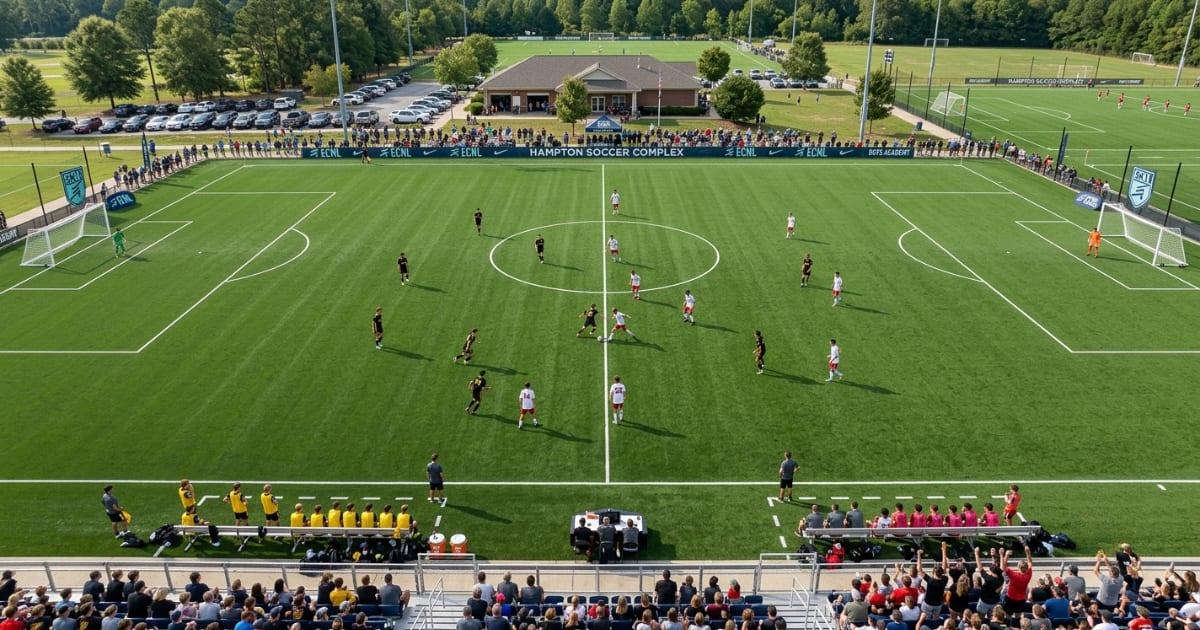
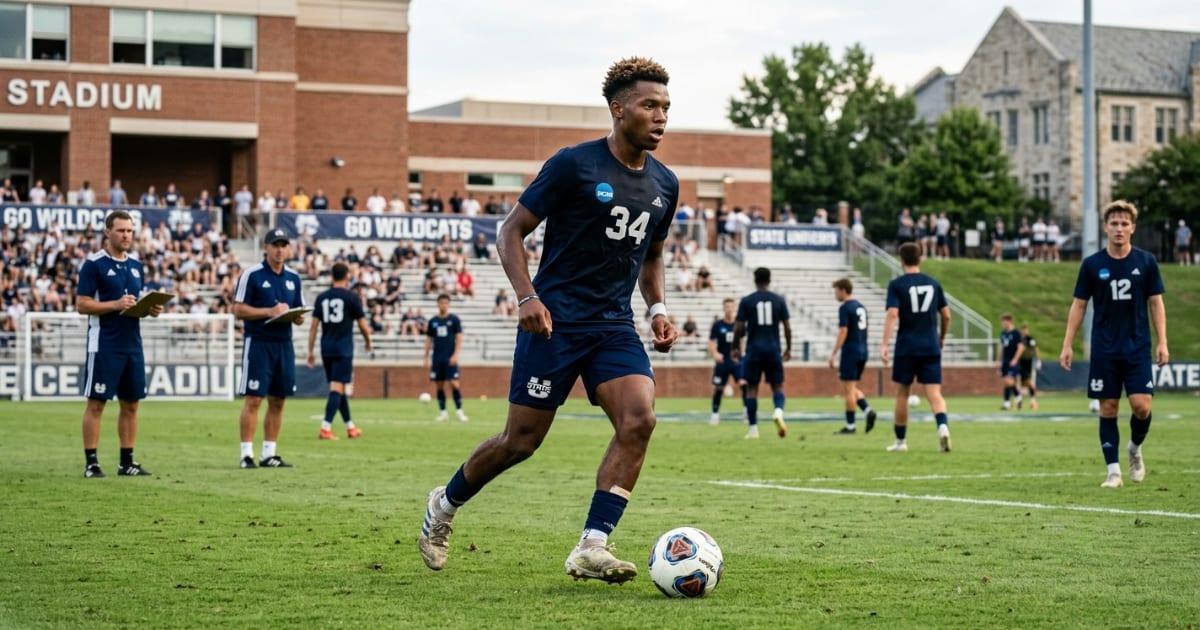
Should You Play MLS NEXT Homegrown or Academy?
MLS NEXT Homegrown or Academy Division? A soccer dad breaks down the differences, from high school soccer and age groups to college recruiting and the pro pathway, with real examples.
 Beau5 min read
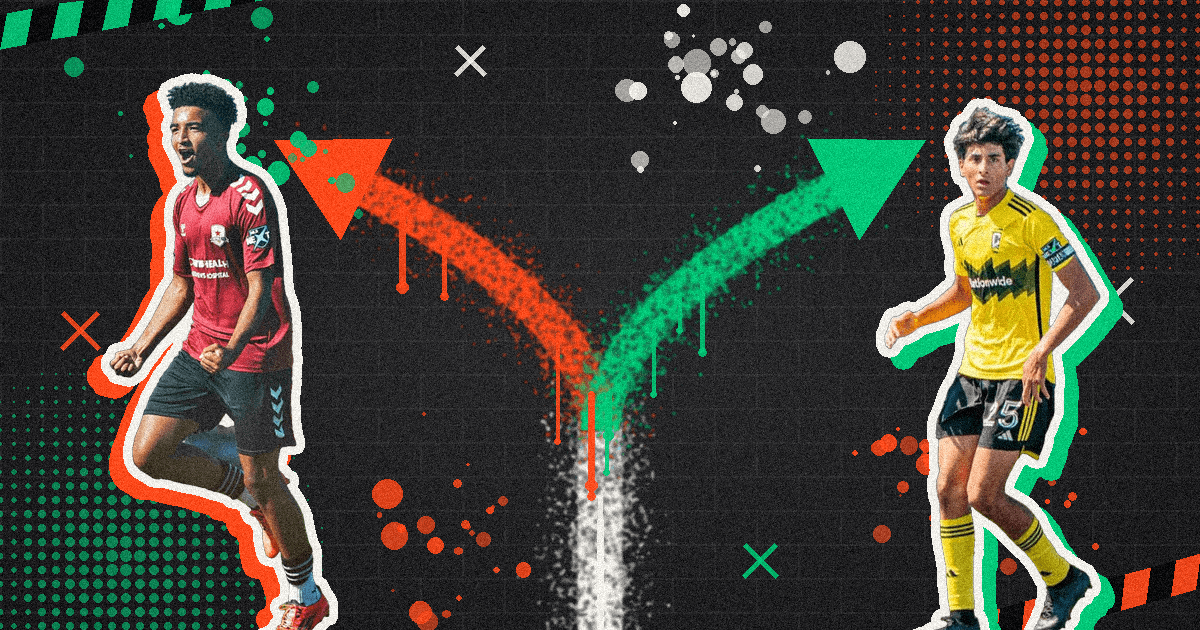
If you're trying to switch for this season, you're probably too late. The 2026-27 MLS NEXT season kicked off in September, and rosters are set. But if your son is a junior or younger, now is the time to think about next year. Here's the short answer. Homegrown is the top tier, with the most training, the toughest games and the most eyes on players. Academy gives you elite competition with room for high school soccer. Both can get you to college.
I'm a soccer dad, and this is the question I hear on every sideline. So let's break it down in plain English.
First, the Names Are Confusing
MLS NEXT has two divisions. The top one is called the Homegrown Division. The newer one is called the Academy Division.
Yes, it sounds backwards. The real MLS academies, like the Revolution or the Union, play in Homegrown. The division called "Academy" is the second tier. (For a deeper look at how the two are structured, here's the difference between the MLS NEXT Homegrown and Academy Divisions.)
Here's the simple version:
- Homegrown Division = top tier. All the MLS club academies plus about 120 of the best independent clubs. Around 152 clubs and more than 17,000 players.
- Academy Division = second tier. Launched in 2025-26. About 230 clubs and 25,000 players. Many of them are second teams from Homegrown clubs, and more than 100 are newer clubs.
The Big Difference: High School Soccer
This is the one that decides it for most families.
Homegrown Division: Your son can't play high school soccer. The only exception is a waiver for kids whose private school admission or scholarship requires them to play. Some Homegrown clubs also carry "Future" players. They can still play high school and can play up to 12 MLS NEXT regular season games.
Academy Division: High school soccer is allowed. The season is built around the high school calendar on purpose.
So ask your son one question first. How much does playing for his school matter to him? Friends, Friday nights under the lights, being a captain senior year. If the answer is "a lot," that points you toward Academy.
Season, Schedule and Travel
Homegrown runs a 10-month, pro-style season. It's more training, more games and more travel. Players get access to MLS NEXT Fest and others if they qualify.
Academy keeps the regular season mostly regional. Teams play in conferences run by league operators like the National Academy League and the Elite Academy League. Academy teams still get big stages. They play at MLS NEXT Fest, and they can earn a spot at MLS NEXT Cup through league play or by winning one of the regional MLS NEXT Cup Qualifier tournaments.
Translation: Homegrown is a lifestyle. Academy is a serious commitment that still leaves room for a normal high school life.
Age Groups Changed This Year
Starting in 2026-27, the two divisions sort players differently.
- Homegrown uses birth year (January 1 to December 31).
- Academy uses school year (August 1 to July 31).
This matters if your son has a fall or winter birthday. In Homegrown, a December kid can end up playing with kids a grade ahead or a grade behind. In Academy, he plays with his own class. Check where he lands before tryouts.
Homegrown Isn't Just a Pro Track
People hear "Homegrown" and think every kid is chasing a pro contract. That's only part of the story.
Only about 30 of the roughly 150 Homegrown clubs are MLS academies. Those are the clubs where the pro pathway is real. MLS teams can sign their own academy players under the Homegrown Player Rule. Philadelphia Union midfielder Cavan Sullivan came up through the Union Academy's U15 and U17 MLS NEXT teams before reaching the first team.
The other 120-plus Homegrown clubs are independent clubs, called MLS NEXT Elite Academies. For most of their players, the goal is college soccer. These kids are playing the highest level of youth soccer in the country so they can land a roster spot at a D1, D2 or D3 school.
So Homegrown isn't really "pro or nothing." It's the hardest week-to-week competition you can find, and that's what a lot of college-bound players want.
The Academy Division is a college pathway too. College coaches watch both divisions at NEXT Fest, the Cup Qualifiers and showcases. A kid who starts and plays big minutes in Academy will usually get seen more than a kid who sits on a Homegrown bench. (And just playing in MLS NEXT doesn't guarantee Division 1 either way.)
Two Examples From the Sideline
Example 1: The high school junior. Jake is a 2028 center back in New Hampshire. He's a solid player, he wants to play D2 or D3, and he loves his high school team. He wants to play for his high school team in the fall, then keep playing club for the next 7 months. For Jake, the Academy Division is a no-brainer. He gets MLS NEXT competition and exposure, he keeps high school soccer, and he plays every week instead of fighting for minutes.
Example 2: The full-time soccer sophomore. Marcus is a 2029 winger at an independent Homegrown club. He doesn't need to be a pro, but he wants to play D1 and he's willing to give up high school soccer to get there. For Marcus, Homegrown makes sense. He trains more, plays tougher games every weekend and gets in front of college coaches at the biggest events. If he were at an MLS academy and his coaches saw a pro future, Homegrown would be the only place to be.
Clubs Can Move Up, So Pick the Club First
Divisions aren't locked forever. MLS NEXT reviews clubs every year. For 2026-27, five clubs moved up from Academy to Homegrown: Club Ohio Soccer, Coppermine SC, One FC, SGA and Sporting City.
So don't just pick a division. Pick the right club. Look for coaches who develop players, a track record of college commits, and a real spot for your son on the field.
What to Do Right Now
If your son is a junior or younger, start this winter. Don't wait for spring.
- Talk to him about high school soccer. His answer narrows the list fast.
- Find out if his birthday changes his age group in either division.
- Make a short list of Homegrown and Academy clubs within driving distance. The U.S. Soccer Map shows every MLS NEXT club near you.
- Watch their games or check results at MLS NEXT Fest and the Cup Qualifiers.
- Ask each club how many of their players went on to play in college, and where.
- Find out each club's tryout dates early. Most clubs set next year's rosters in the spring.
The Bottom Line
Homegrown is for the kid who wants soccer to be his whole season, whether he's chasing a pro contract at an MLS academy or a college roster spot at an independent club. Academy is for the kid who wants elite competition and high school soccer. Neither one is the "wrong" choice. The wrong choice is picking a team where he sits.
Whatever division he lands in, playing isn't enough to get recruited. College coaches need to know he exists. Ninety helps you build a college list, find the right coaches and email them yourself, with no recruiting agency needed. Get started at go90.io.